Every year, hundreds of thousands of people across the UK live with the realities of dementia, a number growing faster than care systems are built to handle. Nearly 982,000 people are currently living with dementia in the UK, a figure projected to pass 1 million in 2025 and reach 1.4 million by 2040 (Dementia Hub). Dementia is now the UK’s leading cause of death, accounting for more than 1 in 10 of all deaths in 2024, even as deaths from other major conditions continue to fall (Alzheimer’s Research UK).
Behind these headline figures sits a more specific, more urgent problem: falls. People living with dementia experience nearly eight times more falls than those without cognitive impairment, making this group a disproportionate driver of the admissions, injuries, and associated cost that falls bring with them. Add to this a population with increasingly complex needs (by 2035, 68% of people over 65 are expected to be living with two or more serious health conditions, up from 54% in 2015, according to The University of Manchester) and the picture becomes clear. This isn’t a future risk to plan for. It’s a present one to act on.
This is reflected in rising hospital admissions, in care teams stretched thinner each year, and in residents who lose confidence and independence faster than services can respond. The pressure is real, it’s growing, and it sits squarely at the intersection of clinical need and care capacity.
This isn’t only a clinical conversation, it’s a regulatory one too, and the direction of travel is unmistakable.
A recent Parliamentary Health and Social Care Committee report called for the CQC to be given responsibility for checking that exercise programmes are being provided in care homes, and for social prescribing of physical activity to become a core, routine offering from GPs and other clinicians. The Department of Health and Social Care is developing new national standards for how exercise programmes designed to tackle frailty should be prescribed, with Integrated Care Boards expected to commission evidence-based programmes delivered at the duration and intensity needed to produce real outcomes. Parliamentary evidence has gone further still, calling on commissioners to make far greater use of existing leisure infrastructure to deliver care closer to where older people live.
In short: structured, evidence-based exercise programmes are moving from “nice to have” to expected, by regulators, by commissioners, and increasingly, by the families making care decisions.
Standard exercise classes don’t work for this population, and that’s exactly where most generic fitness provision falls short. Adaptation isn’t an added extra here. It’s the entire point.
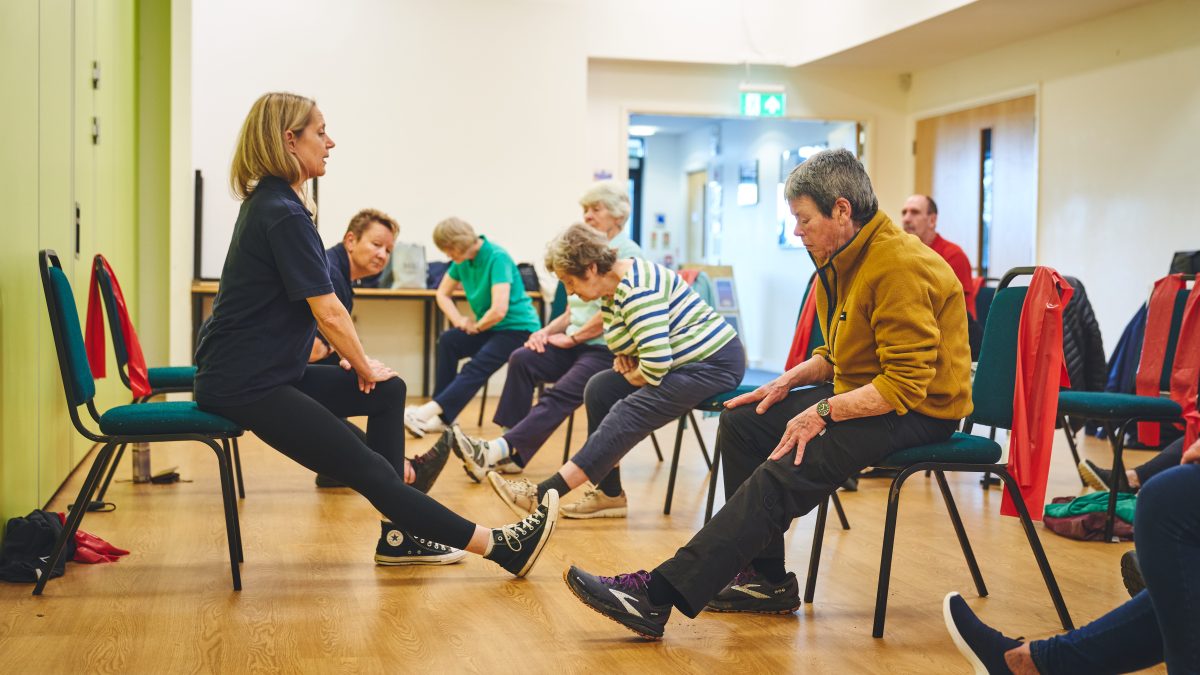
Research into dementia-friendly exercise classes found meaningful improvements in physical activity, mood, loneliness, and cognition, and identified the factors that made the real difference: staff experienced in working with people living with dementia, genuinely accessible venues, and built-in opportunities for social connection. Get that right, and people don’t just benefit from a single session, they keep coming back, and that consistency is where the gains compound.
Exercise helps people living with dementia maintain or restore muscle strength, balance, postural control, bone mass, and functional independence in daily activities, outcomes that translate directly into reduced care dependency and lower fall risk.
For care home managers and activities leads: a way to demonstrate genuinely evidence-based, outcomes-led provision, not just a tick-box activity session, ahead of CQC expectations catching up with policy.
For commissioners and Integrated Care Boards: a clinically grounded, cost-effective way to reduce falls and hospital admissions across the population you’re responsible for, delivered at the intensity and consistency needed to produce real results.
For GPs and social prescribers: a structured, accessible option to recommend to patients and families navigating dementia, built around safety, familiarity, and genuine social connection.
If you work in care, commissioning, or community health and want to understand how dementia-friendly, evidence-based movement could work in your setting, we’d welcome the conversation.
Proudly part of the Future Fit Group, iCareiMove, provides specialist health and wellbeing services designed to enhance quality of life for midlife and beyond. With over 20 years of experience, including trusted partnerships with the NHS, Local Authorities and private sector clients, we improve individuals through education, movement, and lifestyle support. We deliver innovative programmes and training that help people thrive through life stages such as menopause, ageing, and beyond. Our expert-led bespoke programmes are dedicated to empowering people with the skills and knowledge they need.