Stroke ReNeu: Community-Based Stroke Rehabilitation Programme for Falls Prevention and Independence
Helping stroke survivors rebuild confidence, capability and independence.
Helping stroke survivors rebuild confidence, capability and independence.
Stroke survivors leaving acute care face a long, often under-supported road back to independence. Falls risk, loss of confidence, reduced mobility and social isolation are among the most common, and most costly, consequences of inadequate post-stroke rehabilitation, leaving survivors more likely to end up back in hospital, more reliant on others, and living less independent lives than they need to.
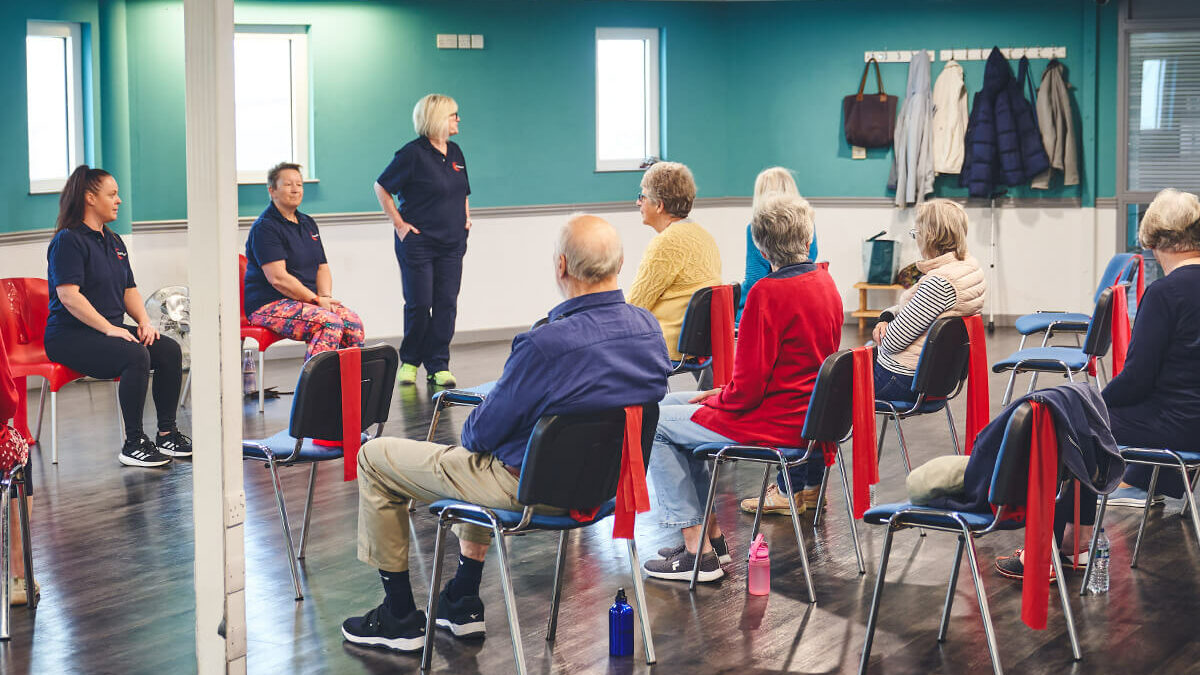
ReNeu is a community-based rehabilitation programme, developed by iCareiMove in partnership with Cornwall Partnership NHS Foundation Trust’s Integrated Community Stroke Service, designed to close that gap. Delivered in a small-group format by an experienced, specialist team, it combines evidence-based physical rehabilitation with practical fall-prevention training and structured self-management support.
Feedback gathered directly from participants shows consistent, sustained improvements in balance and strength, a marked reduction in falls, and critically, the return of everyday independence, cooking, walking, catching a bus, the things that let someone feel like themselves again.
For commissioners and system leaders under pressure to demonstrate both clinical outcomes and cost-effective use of resource, ReNeu offers a model that is low-cost to deliver, high in participant satisfaction, and directly aligned with national priorities around falls prevention, independent living, and reducing avoidable demand on NHS and social care services.
Stroke is one of the leading causes of adult disability in the UK, and the period after discharge is where many of the long-term costs to the health and care system are determined. Survivors commonly experience elevated falls risk, loss of functional independence, and a slide into isolation as fear of falling or “not coping” keeps them from leaving the house, using transport, or staying socially connected.
“Stroke can be a profoundly isolating experience, and the weeks that follow a diagnosis are critical.”
— Helen Tite, Founder, iCareiMove
Participants entering ReNeu described exactly this trajectory before joining the programme; a loss of confidence severe enough that everyday tasks became genuine sources of anxiety. One participant recalled her first outing after her stroke: a short walk to the post box and back, her husband waiting at home with his phone in hand, just in case.
The challenge for commissioners is clear: without structured, well-delivered rehabilitation in the months after a stroke, survivors risk losing far more than mobility, their confidence, their social life, their sense of independence, for years to come.
ReNeu was designed to intervene at exactly this point.
ReNeu is a specialist, group-based rehabilitation programme for stroke survivors, developed by iCareiMove in partnership with the Integrated Community Stroke Service at Cornwall Partnership NHS Foundation Trust. It was built specifically to sit in the space between hospital discharge and everyday life, the period NHS colleagues and founder Helen Tite identified as both the most critical and the most under-supported. It is delivered in both in-person and digital formats, so that where someone lives does not determine whether or not they can take part.
“ReNeu was built to bridge the gap between clinical care and community, to give people the structure, support, and human connection they need to move forward with confidence.
— Helen Tite, Founder, iCareiMove
The programme was co-developed with NHS clinical input from the outset, designed to complement rather than duplicate existing stroke pathways.
“The weeks following a stroke diagnosis can feel overwhelming for patients and their families. ReNeu offers something genuinely valuable: structured, safe, and human-centred support that works alongside our clinical pathways. We are delighted to have been part of creating it.”
— Amanda Hulbert, Manager, Integrated Community Stroke Service, Cornwall Partnership NHS Foundation Trust
Rather than delivering generic physiotherapy, ReNeu is structured around the specific risks and barriers that drive poor outcomes and system cost after stroke: falls, loss of independence, fatigue mismanagement, and low confidence. It is designed to be deliverable at community scale, in a group format that supports both cost-efficiency and peer-to-peer benefit; participants consistently reported learning as much from one another’s experiences as from formal instruction.
The digital option is central to that scale. Cornwall’s geography makes access a real barrier: coastal communities, rural areas with poor transport links, and hilly towns and villages where walking is difficult can all leave people effectively out of reach of in-person services. Digital delivery removes those physical and transport barriers and allows people to be seen from all four corners of the county, including those who would otherwise struggle to attend or be visited.
It also eases the pressure on the workforce. Community-based care involves considerable clinician travel time, which is costly and reduces the time available for patients. Reaching more people digitally reduces that travel time and cost and returns more of each clinician’s week to direct patient care.
“I learned things about what the stroke meant for other people as well, which I think will help me understand other people too, if they had issues.”
ReNeu’s model is built around what really impacts individuals after a stroke: falling, fatigue, and losing the confidence to try.
1. Falls prevention and recovery training
Participants are taught specific, memorable physical techniques for safer walking and for recovering independently if a fall occurs, directly targeting one of the most expensive and disabling consequences of stroke.
“The things that I really remember from the programme is walking, and I say it to myself even now: heel to toe, heel to toe. I would also remember the compensatory step if I trip. I’ve used the hints they gave us for if we did fall and struggle to get up, what to do.”
2. Repetition-based physical rehabilitation
Rather than one-off instruction, the programme is built around small, consistently repeated actions that build lasting motor memory, designed to stick, not just for the weeks of the course, but for good.
“The importance of the repetition, doing a little bit every time and just building it — that helps it go into the body memory. And then I remember what I need to do.”
3. Structured self-management and pacing
Participants are coached in energy management and realistic goal setting from the earliest stage of the programme, equipping them to self-manage fatigue and avoid the setback/relapse cycle that often drives repeat GP admissions.
“I’ve learnt to pace myself and be kind to myself, so that if I do get tired, I either go to bed… I don’t feel guilty about that now. I had to write down my goals, and I’m working through those goals.”
4. Trusted, specialist delivery
Instructor credibility, including lived personal experience of stroke within their own families, was repeatedly cited as central to participant engagement and trust, a key factor in programme completion and sustained behaviour change.
“They really made you feel at ease, and I think they were dealing with a group of people with differences… I thought they dealt with that brilliantly. You really felt that they wanted to help.”
Here’s what that looked like in practice, in participants’ own words:
For commissioners and NHS or local authority leads evaluating post-stroke rehabilitation investment, ReNeu’s model offers several points of alignment with current system priorities:
“I have to say that the people that took the programme were absolutely brilliant. They were so approachable and relatable.”

"I'm just so grateful for the team — they've really pointed me in the right direction and also given me the confidence to reach my goals and regain my independence."
Stroke ReNeu Participant
ReNeu demonstrates what a well-designed, community-delivered post-stroke rehabilitation model can achieve: measurable gains in safety and independence, sustained behaviour change, and a genuinely trusted relationship between participants and the team supporting them.
“We are incredibly proud of what we have created together with our NHS colleagues, and of the difference we know this programme can make.”
— Helen Tite, Founder, iCareiMove
For commissioners and system leaders, the opportunity is here to intervene at the point in the stroke recovery pathway where outcomes, and future cost trajectories, are most malleable.
The testimony gathered here, from participants and NHS partners alike, suggests a programme that is engaging, trusted, and producing outcomes that last.
We always encourage a conversation to get you thinking differently about ageing. Meet the team and start a conversation that could change lives.